In this new Partner Spotlight series, we go behind the scenes of +C2FUe-LS to introduce the organisations driving the project forward and explore their contributions. We begin with BCMaterials, a research centre backed by Ikerbasque, the Basque Foundation for Science, and the University of the Basque Country.
Within +C2FUe-LS, BCMaterials’ team designs and studies the advanced porous structures that support the project’s conversion of CO₂ into valuable alcohols for fuels and high-value chemicals. This conversion relies on a series of tandem chemical reactions, made more efficient and selective by catalysts. In these catalysts, an active component drives the reaction while the surrounding porous structure shapes how CO₂ reaches and interacts with it — and designing that structure is at the core of BCMaterials’ contribution.
The work is led by Roberto Fernández de Luis, with colleagues contributing across the different steps. In fact, the main findings of the work come from a bilateral collaboration with the Institut Laue Langevin, the most powerful neutron reaction dedicated to science. Ms. Elvira Vidal led the design of the materials together with the diffraction studies at BCMaterials supervised by Roberto, whilst Dr. Mónica Jiménez and Mr. Harol Martinez added the spectroscopic and computational side of the full research history.
Small structures with significant potential
BCMaterials’ work focuses on metal-organic frameworks, commonly known as MOFs. These highly porous materials can be pictured as microscopic, sponge-like structures containing a network of internal spaces. This gives them a very large surface area on which gas molecules such as CO₂ can be captured and brought into contact with selected components.
Within +C2FUe-LS, they provide carefully designed structures into which small quantities of metals, such as copper or iron, can be introduced. These metals can create active sites where chemical reactions involving CO₂ may take place, while the surrounding MOF influences how the molecules reach and interact with them. Understanding exactly where these metals are located and how they are integrated within the MOF structure is essential. However, studying such small quantities is challenging, as conventional laboratory equipment cannot always provide the required level of detail.
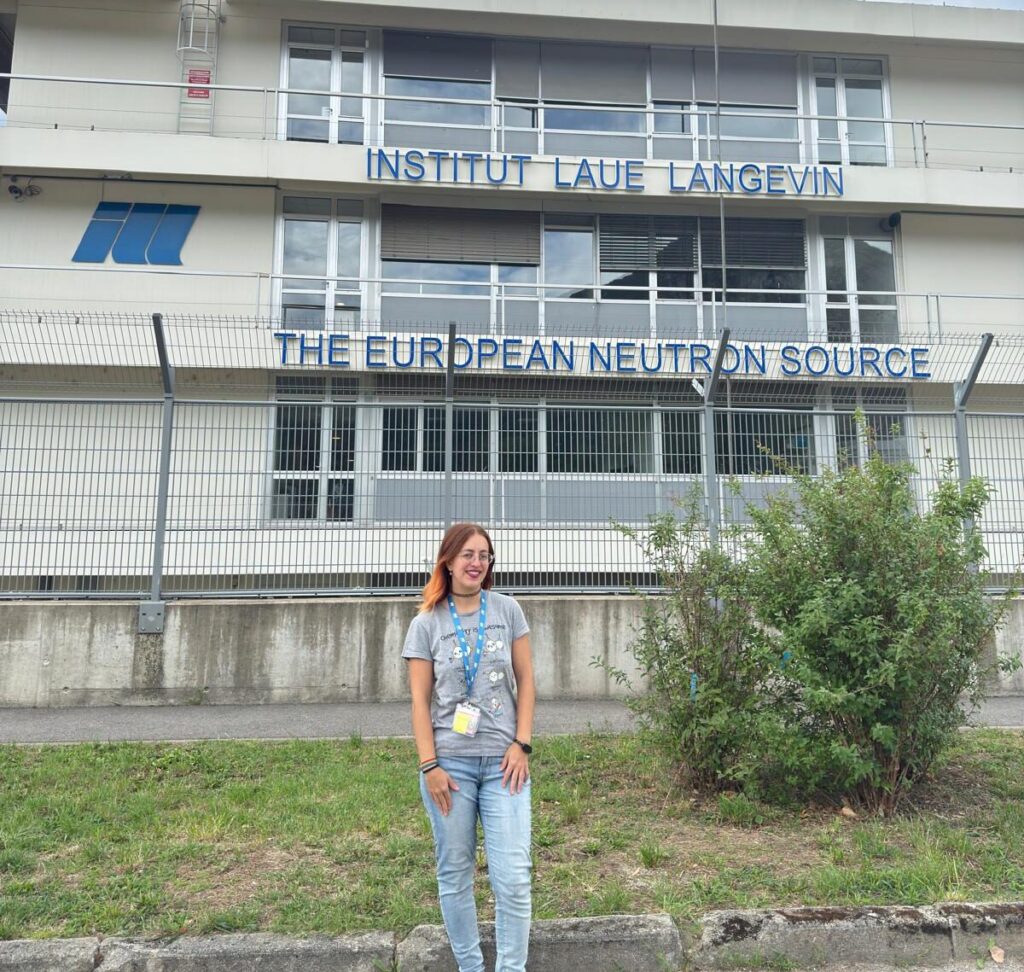
Photo credits: BCMaterials
Investigating how CO₂ behaves inside the material
To examine the materials more closely, the BCMaterials team recently conducted experiments at the Institut Laue-Langevin in France, one of the world’s leading neutron research facilities.
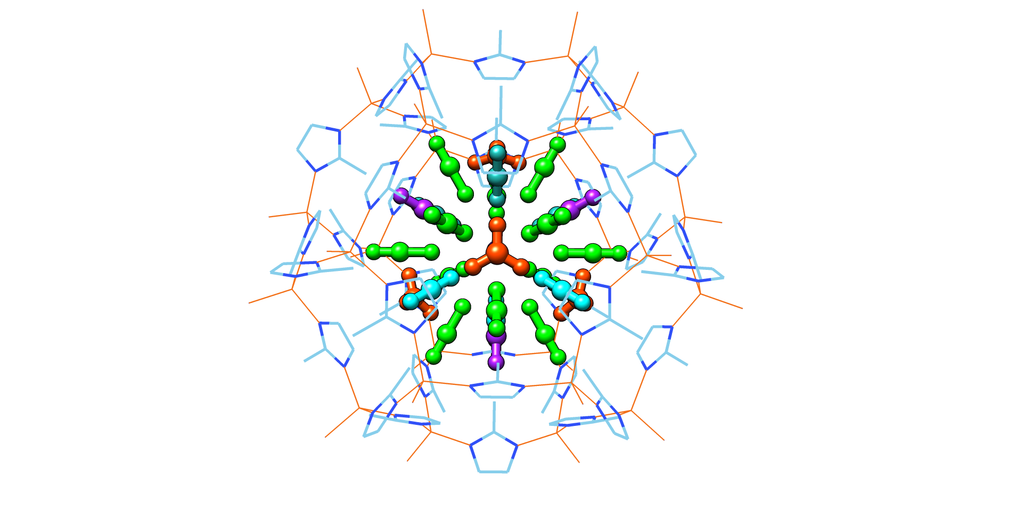
Using advanced neutron-based techniques alongside computer modelling, the researchers investigated how the metals are incorporated into the MOFs and where CO₂ molecules are positioned within their internal structure.
The experiments showed that CO₂ can occupy several different positions within the material. When copper was introduced, however, the CO₂ molecules were preferentially attracted towards regions associated with the copper. This is a promising result because the copper is intended to provide active sites for the chemical reaction. In other words, the MOF structure appears to direct CO₂ towards the locations where its conversion is expected to begin. The findings do not yet demonstrate that the complete reaction is taking place. They nevertheless provide valuable evidence that the material has structural characteristics that could support CO₂ conversion.
“What we know now is that the CO₂ is located very close to the copper sites that are expected to drive the reaction. Understanding this interaction is an important step towards designing more effective materials.” — Roberto Fernández de Luis, BCMaterials
Supporting an innovative conversion process
These findings are particularly relevant to one of the project’s most innovative research areas: plasma-assisted catalysis. This could allow the project’s conversion process to operate under mild conditions, rather than relying on the high temperatures and pressures commonly required by conventional processes. During an initial stage, +C2FUe-LS aims to combine CO₂ with green hydrogen and renewable electricity to produce formaldehyde. This highly reactive intermediate can be used to build larger molecules. Its reactivity also makes it difficult to control, as the process must favour its formation without allowing it to be immediately transformed into unwanted products.
Combining plasma-assisted catalysis with MOF-based materials remains a relatively unexplored research area. BCMaterials is therefore investigating whether carefully designed MOF structures can bring CO₂ close to the required active sites and create a suitable environment for the intended reactions. The team is also preparing MOF-based materials for subsequent conversion stages, which aim to transform the initial CO₂-derived intermediates into larger molecules, including alcohols that could contribute to the production of renewable synthetic fuels.
Credits: BCMaterials
From laboratory powders to reactor integration
BCMaterials’ work is not limited to this first step: the team is also preparing MOF-based materials for the later conversion stages, which build the initial intermediates into larger molecules. Both the plasma-step and later-step catalysts are already being tested.
These MOF-based materials are currently produced as fine powders. The next step will be to deposit the materials onto specially designed 3D-printed structures. These structures will allow gases to circulate more freely while providing a large surface area across which the MOFs can be distributed. Working with other +C2FUe-LS partners, the team will identify the most promising materials, which will then be built into the 3D-printed structures and later tested in the project’s reactor.
Through its work, BCMaterials is helping to translate a detailed understanding of MOFs at the molecular level into structures that can support the project’s CO₂ conversion process. The next stages will show how effectively these carefully designed structures perform under operating conditions.